
Juniper vs Cypress: How to Tell Them Apart in UK Gardens
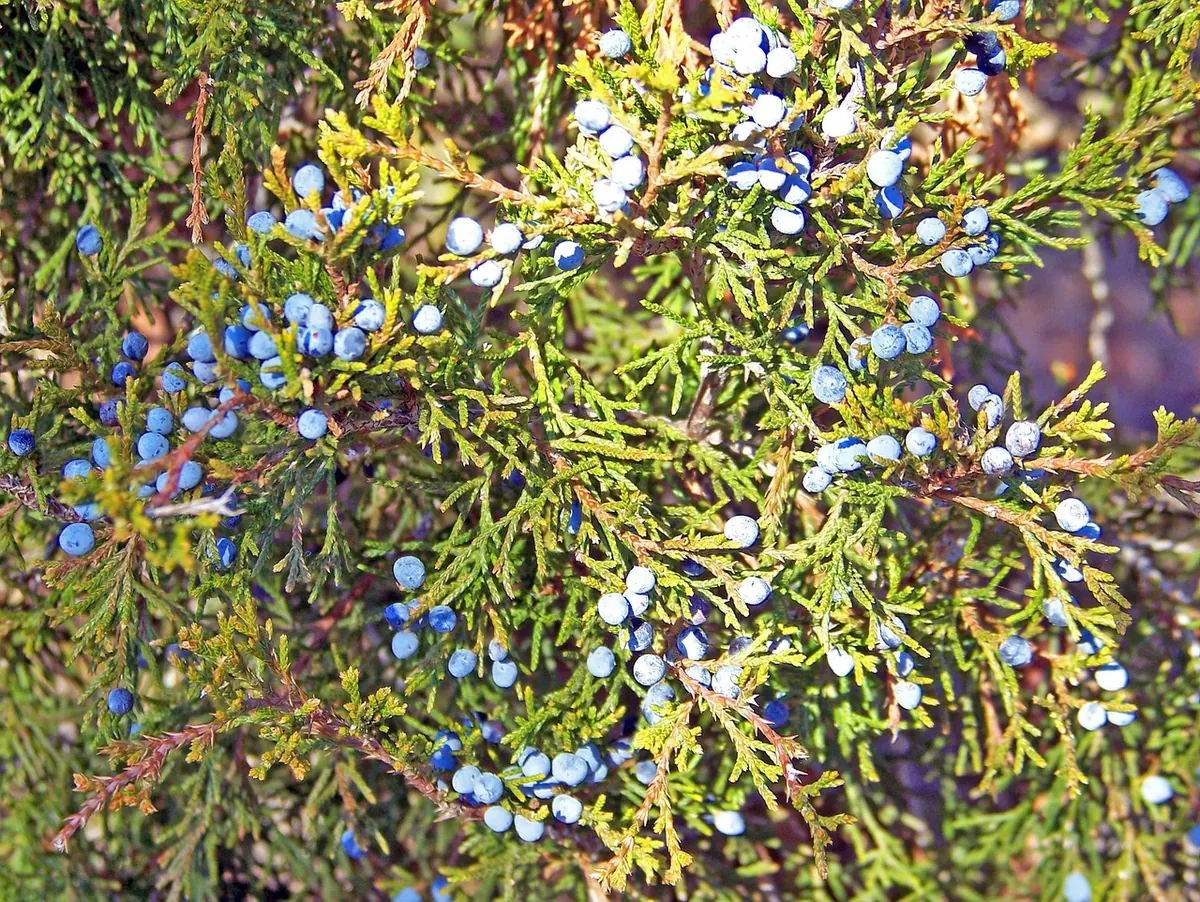
You can be forgiven for mixing them up. Both are evergreen conifers, both hold their foliage through winter, and both turn up in the same places: hedging, gravel borders, rock gardens and pots by the front door. In Britain we are especially careless with the word "cypress" — it gets attached to Lawson cypress, Leyland cypress and the true Mediterranean cypress, which are three different plants. Meanwhile, a low silver shrub that everyone calls a cypress is very often a juniper. The good news is that a few minutes with a sprig in your hand settles the question.
Foliage: the quickest clue
Pick a small sprig and look closely. Junipers (Juniperus) usually carry two kinds of foliage on the same plant. Young growth and shaded shoots have sharp, needle-like leaves arranged in whorls of three, stiff enough to prick your thumb. Mature growth often switches to tightly packed scale leaves that clasp the stem, but even those tend to feel rough and spiky on a true juniper. Roll a few leaves between your fingers and you get a sharp, resinous scent — the smell of gin, which comes from juniper cones rather than any herb.
Cypresses are softer to handle. The classic cypress shoot is a flattened spray: scale leaves pressed close to the stem, forming fan-like fronds that look as though someone has ironed them. Hold a spray of Lawson cypress up to the light and you will often see pale, whitish bands on the underside. Crush it and the scent is green and slightly parsley-like. True Mediterranean cypress (Cupressus sempervirens) has finer, rounder shoots that are more cylindrical than flat — but still nothing like the needle-and-scale mixture of a juniper.
A two-second test
Roll a shoot between finger and thumb. Sharp, spiky, mixed needles and scales with a resinous smell means juniper. Soft, flat, fan-like sprays mean cypress.
Cones: berries versus woody cones
Junipers do not make berries in the botanical sense, though almost everyone calls them that. The female cones are fleshy and fused, turning from green to a dusty blue-black over two seasons, which is why you can find green and ripe ones on the same branch at the same time. Male cones form tiny yellow-brown clusters at the shoot tips in spring and release clouds of pollen if you tap them.
Cypress cones are unmistakably woody: round or oval, built from overlapping scales that dry and open to release winged seeds, usually within a year or two. On an older Leyland or Lawson hedge you will find small brown cones tucked among the foliage in autumn. A plant carrying blue-grey fleshy cones is a juniper; a plant with dry brown cones is a cypress.
Growth habit and shape
Junipers are the more varied group by far. You can buy one that hugs the ground and spreads into a carpet, such as Juniperus horizontalis, or a compact blue mound like Juniperus squamata 'Blue Star'. Others form neat narrow columns — 'Skyrocket' is the classic — while Juniperus communis can be grown as a small, characterful tree. Habits range from prostrate mats to tight spires, and many look pleasantly informal, with a slight twist or spiral in the branches.
Cypresses are more predictable. Most form an upright, conical tree or a dense column, with a strong central leader and branches that sweep upwards. Leyland cypress and Lawson cypress both grow quickly — metres in a few years on decent soil — which is why they dominate British screening hedges. If a conifer has shot up into a dense green wall and needs trimming twice a year, it is almost certainly a cypress rather than a juniper.
Bark, wood and winter colour
Both have fibrous, shredding bark, so this is a weaker test. Juniper foliage often takes on bronze, purple or blue tones in cold weather, and many blue selections look their best in January. Cypress foliage generally stays green or yellow-green, though golden forms can scorch in a hard frost and will appreciate a sheltered spot.
Common garden uses in the UK
- Juniper: ground cover on slopes and gravel, rock gardens, coastal sites, drought-tolerant borders, low informal hedging, large pots.
- Cypress: tall screening, boundary hedges, windbreaks, conifer beds, fast structural planting where height is needed quickly.
That difference in habit explains the difference in care. Junipers usually want full sun, sharp drainage and very little fuss, and trimming is light and occasional. Cypress hedges need a firm cut once or twice a year, and it pays to keep the base slightly wider than the top so light reaches the lower branches instead of leaving you with a bare, brown skirt.
Quick identification checklist
- Foliage sharp and needle-like in places? Juniper.
- Soft flattened sprays with pale bands underneath? Lawson cypress.
- Blue-grey fleshy cones on the stems? Juniper, every time.
- Dry brown woody cones in autumn? Cypress.
- Crushed foliage resinous and gin-like? Juniper. Green and parsley-like? Lawson cypress.
- Prostrate or sprawling with no clear trunk? Almost certainly a juniper.
- Narrow, fast-growing column that needs constant clipping? Most likely a cypress.
If you are still unsure
Cut a sprig about 10 cm long from a side shoot, bring it indoors and study how the leaves attach to the stem. Then crush a few and smell them, and check the surrounding branches for cones. If the plant is a young, unlabelled purchase, take the sprig to a garden centre and compare it with the labelled stock — that is usually faster than hunting through plant books.
Knowing which one you have changes how you treat it. Junipers resent wet feet far more than cold, so improve drainage before planting and avoid crowding them with thirsty perennials. Cypresses tolerate most soils but will not regenerate from bare old wood, so never cut a hedge back past the green growth. Handle both with a little care and you will have an evergreen that earns its space for years.