
Juniper Berry Harvest: A Seasonal Guide to Picking, Drying and Storing in the UK
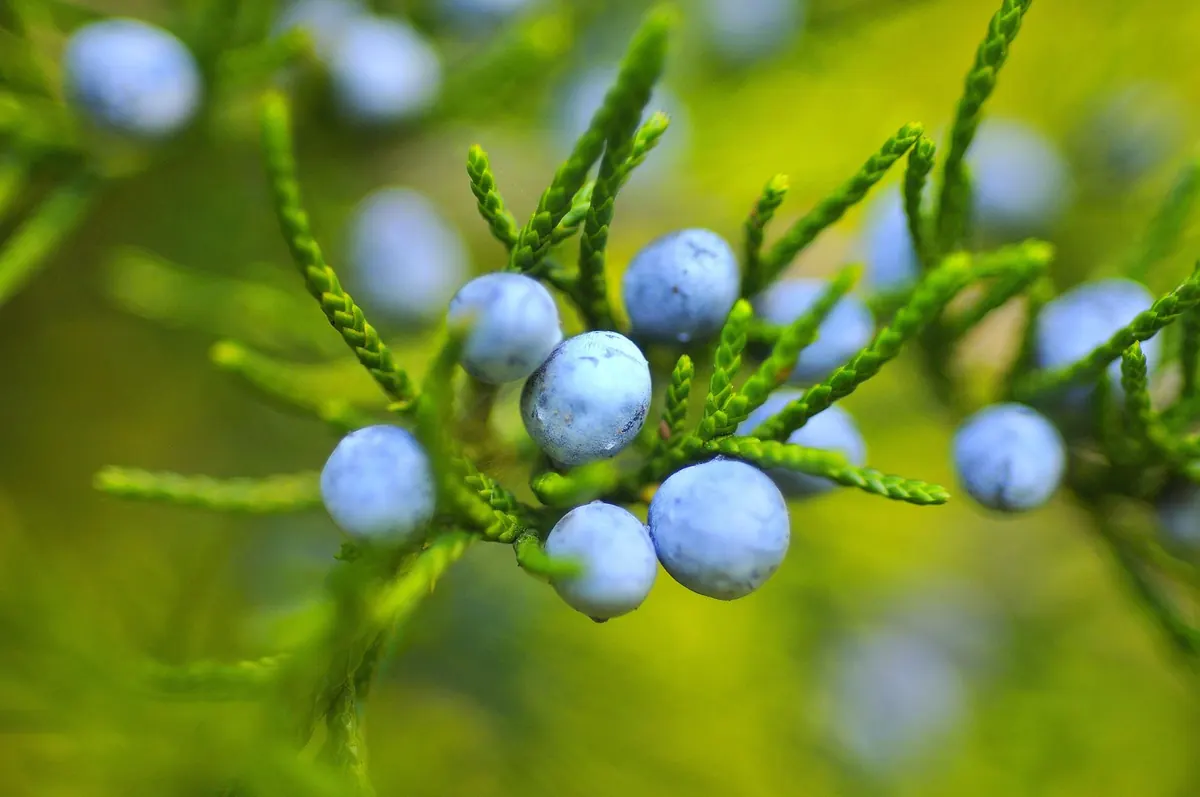
Juniper is one of the few British shrubs that gives you something to harvest as the year runs down. The berries — technically tiny fleshy cones — ripen slowly over two or three summers, so a single bush can hold green, half-grown and fully ripe fruit at the same time, sometimes on the same branch. Learning to tell them apart is the whole skill. Get it right and you have a small, fragrant crop for gin, game sauces, sauerkraut and winter wreaths; get it wrong and you strip a slow-growing native shrub for nothing.
Reading the bush: what a ripe juniper berry looks like
Common juniper, Juniperus communis, is the one you want. Its needles are stiff and sharp, arranged in whorls of three, with a single pale stripe on the upper surface. Female plants carry the berries; male plants don't, so a bush that never fruits isn't necessarily a poor one. Ripe berries are deep blue-black with a dusty grey bloom, roughly the size of a small pea, and they give slightly between finger and thumb — like a firm grape rather than a stone. Crush one and the smell is unmistakable: sharp, resinous, close to gin.
Unripe berries are green and hard, and they stay that way through their first year. Third-year berries often look duller, browner and shrivelled, and are past their best. If you are unsure of the species, don't pick. Ornamental junipers and savin look similar but aren't kitchen material, and a few garden shrubs produce blue-black berries that aren't juniper at all.
Run through this quick test before you fill a bag:
- Colour: deep blue-black, not green or washed-out purple.
- Bloom: a soft grey-white dusting that rubs off on your fingers.
- Feel: gentle give, with no woody core under the skin.
- Scent: resinous and pine-like when crushed.
- Attachment: the berry drops into your palm at the lightest touch.
When to pick in the UK
The main window runs from late September to the end of November, stretching into December in mild coastal spots. Southern lowland bushes tend to colour up before northern and upland ones, and a single plant ripens over several weeks rather than all at once. That's useful: you can visit twice and take only what's ready.
The old advice about waiting for the first frosts has some sense in it — by then the berries are fully coloured and the season is closing — but don't leave it so late that the birds beat you to it. Thrushes, fieldfares and waxwings feed on juniper through the winter.
Pick on a dry morning once the dew has lifted. Wet berries go mouldy in the drying tray, and rain washes off the bloom that tells you they're ready. Thin gardening gloves save your hands from the needles, and a shallow tray or bucket stops the crop being crushed.
Picking without damaging the bush
Ripe berries come away easily. Hold a sprig over your open palm and stroke downwards, or cup a hand under a branch and tap it gently; good berries fall on their own. If you're having to tug, either the berry isn't ready or you're about to snap the stem. Never strip a branch bare, and never break off fruiting wood — juniper grows slowly and repairs itself more slowly still.
In the wild, take a handful, not a harvest. Wild juniper is scarce across much of Britain and is a plant of conservation concern in many counties, so find out who owns the land and ask before you pick. Sites with statutory protection normally don't allow it, and it's worth knowing that before you set out. Garden juniper is the easiest and most sustainable option: a mature shrub in a border will give you more than you need, and the trimmings can go straight into a wreath afterwards.
Drying juniper berries
Air drying is the method that keeps the aroma intact. Spread the berries in a single layer on a tray lined with newspaper or baking parchment and leave them in a warm, dark, well-ventilated room for one to three weeks. A muslin bag hung from a hook works just as well and keeps the crop out of the way.
- Pick over the berries and discard any that are soft, split or green.
- Spread them in a single layer — no heaps, which trap moisture.
- Keep them out of direct sun and away from radiators and stoves.
- Turn every few days until they are wrinkled and rattle when shaken.
- Test one: it should be dry right through, with no soft centre.
Avoid the oven. Heat above roughly 40–50°C drives off the volatile oils that carry the flavour, which is a poor trade for speed. A dehydrator on its lowest setting is acceptable if you're working through a damp spell, but expect a less fragrant result.
Storing for kitchen and craft
Whole berries keep their flavour far longer than ground ones, so grind only what you need — a dozen at a time in a pestle and mortar or an old coffee grinder. Store the whole crop in a small airtight jar in a dark, cool cupboard, labelled with the date and where it came from. Dried berries hold their bite for about a year; after that they still work in slow-cooked dishes, though the gin-like top notes fade.
Fresh berries can be frozen instead of dried. Spread them on a tray, freeze until solid, then bag them so they don't clump. They defrost soft, which makes them ideal for sauces and marinades but not for garnish.
For a simple infusion, half-fill a jar with lightly crushed berries, top up with gin or vodka, seal and leave in a cool dark place for four to six weeks, shaking occasionally before straining. In the kitchen, a few berries go a long way: they cut through fatty game, lift red cabbage and sauerkraut, and suit apple jelly, soda bread and pickles. For craft use, dried berries hold their colour well in wreaths and garlands and mix nicely with dried orange slices and cinnamon in a winter potpourri, provided they're kept out of bright sun.
One sensible note: juniper berries are a flavouring, not a snack, and concentrated juniper oil shouldn't be taken internally. If
Photo: Pixabay / Pexels