
The Beginner's Guide to Growing Junipers in Containers
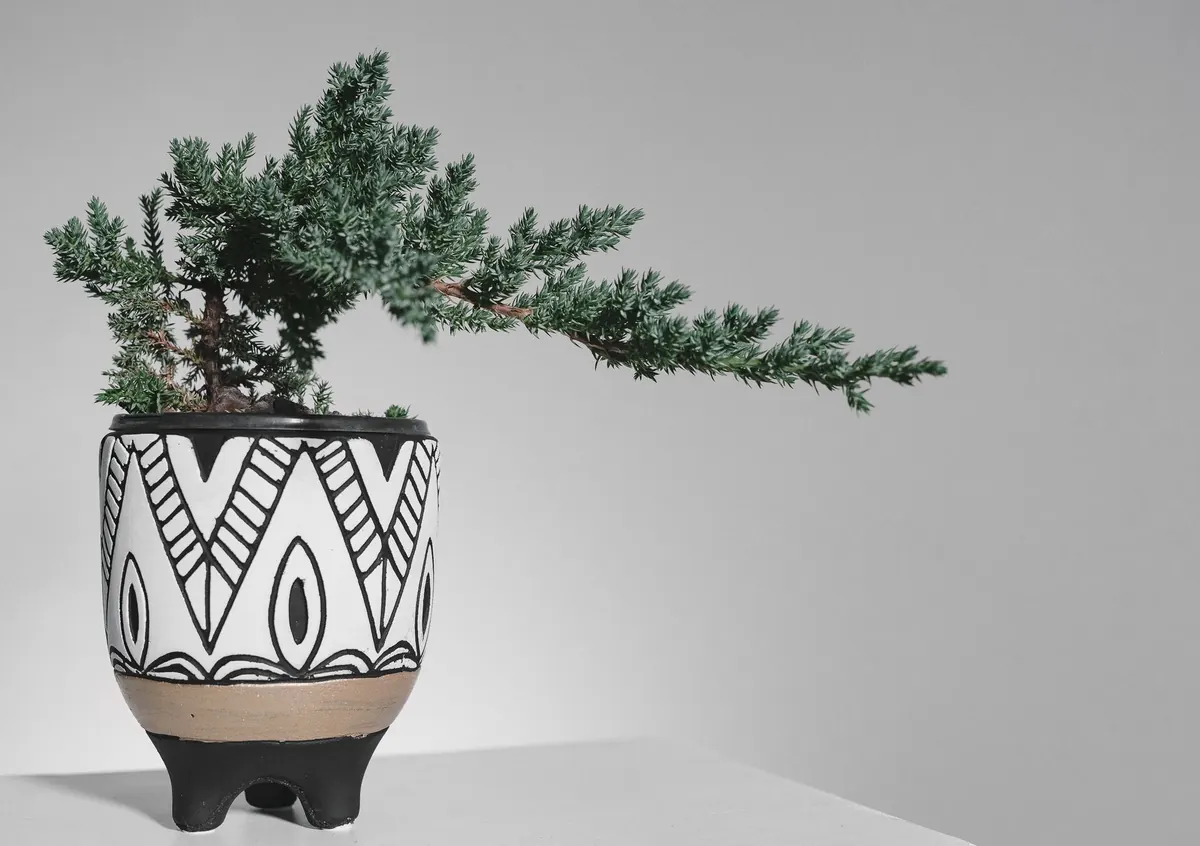
Junipers have a reputation for being tough, and mostly they earn it. On a British patio they shrug off wind, frost and dry spells far better than most evergreens. What they will not tolerate is a soggy rootball or compost that has quietly run out of goodness. Get four things right — the pot, the mix, the watering and the occasional root tidy — and a juniper will sit in the same spot looking content for a decade or more.
Choose the right juniper for a pot
Not every juniper behaves well in confinement. The compact, slow-growing forms are the ones worth hunting down. Juniperus communis 'Compressa' is a narrow grey-green column that grows so slowly it can live in a 30cm pot for years. Juniperus squamata 'Blue Star' makes a low, steely-blue mound. Prostrate types such as Juniperus procumbens 'Nana' and Juniperus communis 'Green Carpet' will trail over a rim nicely.
Upright accents — 'Skyrocket', 'Stricta' — are handsome but need a deeper container, because their roots mirror their height. When you buy one, slide it out of its nursery pot and look. If the roots are already circling the base in a tight coil, plant it into something bigger straight away rather than waiting for spring.
Choosing a pot
Size matters more than material. For a small juniper, treat 30cm across as the minimum; a metre-tall upright wants at least 40cm of depth and width. A plant in a pot that is too small will dry out twice a day in July, and no amount of good intentions will keep up with it.
Beyond size, look for:
- Generous drainage holes. One is rarely enough. Check the base before you buy.
- A heavy, frost-proof pot. Glazed ceramic or thick plastic holds moisture longer and resists toppling on a windy balcony. Terracotta breathes and dries faster, which suits a sheltered, sunny corner.
- A pale colour if the pot faces full sun all afternoon — dark pots cook roots in a heatwave.
- Pot feet or bricks to lift the base clear of the paving so water can escape.
- A square or wide profile for stability. Tall narrow pots tip over in gales.
Why drainage beats everything else
Junipers come from gritty, rocky ground and hate sitting in wet. In winter, a waterlogged rootball rots quietly and the plant is usually dead by May, still green, before you notice. Anything you do to improve drainage is worth the effort. If you are on a balcony, remember that a large pot filled with wet compost is genuinely heavy, so check what your balcony is designed to carry before you commit.
The compost mix
A soil-based compost holds nutrients for longer than multipurpose, and grit keeps it open. A reliable blend for most junipers:
- 2 parts John Innes No. 2 (No. 3 for a mature specimen)
- 1 part horticultural grit, 3–5mm
- 1 part composted bark or leafmould
- A small handful of slow-release fertiliser
Avoid pure multipurpose compost, which collapses into a sticky mass by August, and avoid ericaceous compost — junipers are not acid-lovers and grow perfectly well in neutral soil. Never use garden soil straight from the border: it sets like concrete in a pot. Finish with a 2cm top-dressing of grit around the stem. It keeps the lower foliage off damp compost and makes weeds and liverwort far easier to spot.
Watering
More container junipers are lost to watering than to anything else, in both directions. Water slowly until it runs out of the drainage holes, then stop and wait. Testing is simple: push a finger 3cm into the compost, or lift the pot and judge the weight. Dry and light means water; damp and heavy means leave it alone.
In high summer, a small pot may need a drink every morning, and on a hot, windy balcony occasionally a second one in the evening. Larger pots can go two or three days. From October to March, cut right back — a monthly check is usually plenty, and do not water frozen compost. Never let a pot stand in a saucer of water, and do not assume rain has reached the rootball; dense juniper foliage sheds a surprising amount of it.
Feeding
Junipers are light feeders. Overfeeding produces soft, floppy growth that snaps in the wind and attracts aphids. A slow-release granular feed scratched into the surface in April is enough for most plants. Through the growing season you can add a liquid seaweed or balanced feed at half strength every three to four weeks, stopping by early August so new growth firms up before winter.
Always water a dry rootball before feeding, or you risk scorching the roots. In a container, a spring top-dressing of fresh compost often does as much good as any bottle or box.
Repotting
Young junipers need repotting every two to three years. Mature ones can stretch to four or five. The signals are roots appearing at the surface or through the drainage holes, and water running straight through the pot instead of being absorbed. Late March to mid-April is ideal, with early September a good second choice. Avoid midsummer and the depths of winter.
- Water the plant the day before to make the rootball hold together.
- Lay the pot on its side and ease the plant out. If it sticks, run a knife around the inside edge.
- Tease out the outer roots with a table fork and trim up to a third of the rootball with sharp secateurs if it is tightly matted.
- Shake away roughly a third of the old compost and replace it with fresh mix.
- Return it to the same pot or move up by only 2–4cm in diameter.
- Firm gently, water well, and keep it out of direct sun and wind for a fortnight.
Resist the urge to jump several pot sizes at once. A large pot of compost with very few roots in it stays wet for weeks and is a rot risk. Skip feeding for four to six weeks after repotting, and mist the foliage on warm afternoons while it settles.
Patio and balcony conditions
Wind is the real enemy on a balcony, drying foliage and rocking pots until roots break. Group pots together for mutual shelter, weigh down containers, and consider a solid screen on the prevailing side. Walls and paving reflect heat, so a south-facing corner can be several degrees warmer than the rest of the garden — helpful in winter, punishing in July.
Roots in pots freeze harder than roots in the ground. Move containers to a sheltered spot against a house wall for winter, wrap terracotta in hessian or bubble wrap, and keep them off cold paving. Cold and wet together is far worse than cold and dry. Check ties and stakes after every gale.
A simple year-round routine
Spring: repot if needed, top-dress with fresh compost, scatter slow-release feed, start watering properly again. Summer: water deeply and regularly, check daily in small pots. Autumn: reduce watering, stop feeding, tidy any dead interior growth. Winter: shelter from wind, water sparingly, and leave the foliage alone.
Do those few things and your juniper will do the rest — slowly, quietly, and for a very long time.
Photo: Scott Webb / Pexels