
Juniper Types for Small UK Gardens: 8 Compact Varieties Compared
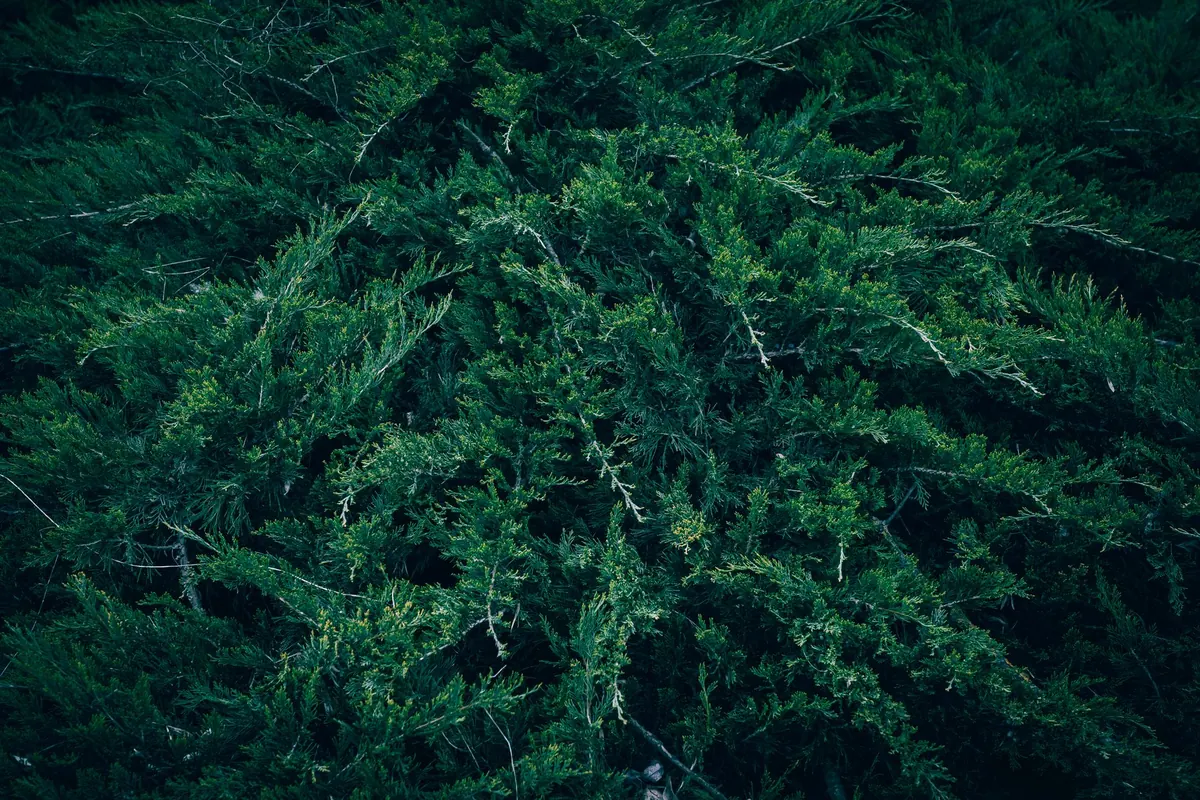
Small gardens punish a bad plant choice faster than large ones. A conifer sold as "compact" that quietly turns into a two-metre spreader will swallow a border in three seasons, and junipers have a reputation for exactly that. Yet they are also some of the most useful evergreens a tight plot can hold: wind-proof, drought-tolerant, good-looking through the dullest months and perfectly happy in a pot for years. The trick is buying by growth rate and eventual spread, not by the size of the little plant sitting on the nursery bench.
Read the Label, Then Ignore Half of It
Most juniper labels quote a ten-year size. It is a useful guide and a misleading one, because junipers never truly stop. They slow down, they widen and they keep going. A plant described as reaching 60cm may be twice that in another fifteen years.
What matters more is the annual growth rate:
- Slow — a few centimetres a year. Ideal for troughs, gravel and small pots.
- Moderate — roughly 10 to 15cm a year. Fine for a border, provided you know where it will be in a decade.
- Vigorous — 30cm or more. Uncommon among the compact types, but worth checking before you buy.
Two other things shape the result. Sun brings out foliage colour, especially in the blues and golds; shade makes everything greener and looser. And drainage matters far more than soil richness. Junipers in wet ground sulk, yellow and die back, often without warning.
The Eight, Compared by Role
Narrow uprights: height without the footprint
Juniperus scopulorum 'Blue Arrow' is the best vertical accent for a tight plot. Steel-blue, remarkably slim — often only around 60cm across — but not short, reaching two and a half metres and beyond over time. Think of it as a slim pillar rather than a dwarf. It takes wind and coastal salt without complaint and makes a good pair of sentinels either side of a door or path, in the ground or in a large pot.
Juniperus communis 'Compressa' is the slowest and neatest of the uprights. A dense, tight column of grey-green that is often no more than knee-high after a decade, and still slender when mature. This is the one for a gravel bed, a stone trough or a pot by the door where you want shape without shade being cast. It insists on sharp drainage and hates a wet winter.
Juniperus chinensis 'Stricta' is the green-blue column sold in every garden centre. More vigorous than 'Compressa', it will reach roughly two metres in time with a spread under a metre — useful as a year-round screen for a neighbour's window or a backdrop to a bench. It takes light, regular tipping far better than hard cuts.
Juniperus communis 'Gold Cone' brings gold into the narrow upright group. It is brightest in full sun and turns distinctly green in shade, so do not waste it in a dim corner. Slower than 'Stricta'; expect around a metre in ten years. It looks superb with dark foliage or purple heathers behind it.
Mounded dwarfs for borders and pots
Juniperus squamata 'Blue Star' is a tight, slow bun of steel-blue needles, usually 40 to 60cm high and a little wider after many years. It is one of the best small junipers for a container: it keeps its shape without clipping, and the colour lifts grey paving and gravel. Full sun gives the strongest blue.
Juniperus x media 'Old Gold' is soft gold-bronze, spreading and low, usually staying under a metre. The colour is best in sun, and it holds a warmer tone through winter than many gold conifers. Use it to warm up a dark corner of a border. It also responds well to light shearing if it starts bulging over a path.
Ground-huggers for edges, slopes and troughs
Juniperus horizontalis 'Blue Chip' is silver-blue, low and travelling — usually no more than 30cm tall but a metre and a half across in time. Excellent on a slope or spilling over a low wall. Less good in a tiny bed where you want to plant underneath it, so either give it room or keep it in a wide, shallow pot.
Juniperus procumbens 'Nana' is the classic dwarf Japanese garden juniper: blue-green, dense and mounding, around 30cm tall with a slow spread. It is superb in a trough or wide container where its layered habit can be seen, and it takes shaping kindly. Wind and poor soil are fine; waterlogged soil is not.
Matching the Plant to the Spot
- A narrow gap between path and fence: 'Blue Arrow', 'Compressa' or 'Gold Cone'.
- Containers by a door or on a patio: 'Blue Star', 'Compressa', 'Procumbens Nana'.
- Exposed, windy or coastal sites: 'Blue Arrow', 'Blue Chip', 'Blue Star'.
- Ground cover on a slope or bank: 'Blue Chip', with 'Procumbens Nana' at the top edge.
- Winter interest where little else is happening: 'Old Gold' and 'Blue Star' together.
Growing Junipers in Pots
- Choose a container at least 30 to 40cm across, wider than it is deep, with plenty of drainage holes.
- Use a gritty mix — loam-based compost with roughly a quarter to a third horticultural grit by volume.
- Stand the pot on feet so the drainage holes stay clear, and never let it sit in a saucer of water over winter.
- Water thoroughly when the top few centimetres of compost feel dry. Pots dry out fast in sun and wind.
- Feed lightly in spring with a slow-release general fertiliser. Overfeeding produces soft, floppy growth.
- Repot every three or four years into the same pot with fresh compost, trimming a little of the root ball if it is tightly wound.
Pruning Without Ruining the Shape
Junipers do not regrow from bare old wood, so the rule is simple: cut lightly and often, never hard. Tip-prune in late spring or early summer, taking just the soft new growth and leaving a little green behind every cut. Avoid pruning in autumn, when cuts sit wet through the winter. Dead or damaged stems can come out at any time, and if you are shaping a hedge or a pair of pillars, two light trims a year will keep the line far better than one severe one.
Two Problems Worth Knowing About
The first is wet roots. Poorly drained soil, a blocked pot or a winter of standing water can bring root rot, which shows as yellowing, thinning and dieback that rarely reverses. Fix drainage before you plant, not afterwards. The second is dry, sheltered heat, which suits sap-sucking
Photo: Wyxina Tresse / Pexels