
The House Always Wins? Why Smart iGaming Players Still Beat the Odds
Ask ten casino regulars why they play, and you will get ten different answers. One loves the adrenaline of a slot bonus round. Another lives for the quiet math of a poker table. A third just wants to sweat a five-team parlay on a Sunday afternoon. What almost none of them will admit is the uncomfortable truth at the center of the entire iGaming industry: the games are built to take more than they give. And yet, year after year, a small subset of players walks away ahead. Not because they are lucky in some mystical sense, but because they understand the mechanics better than the people selling them the dream.
What the House Edge Actually Means for Your Bankroll
Most casual players treat the house edge as an abstract number, something you read in a review and forget five seconds later. That is a mistake. The edge is the single most important figure in any gambling decision, and it is not linear in the way people assume.
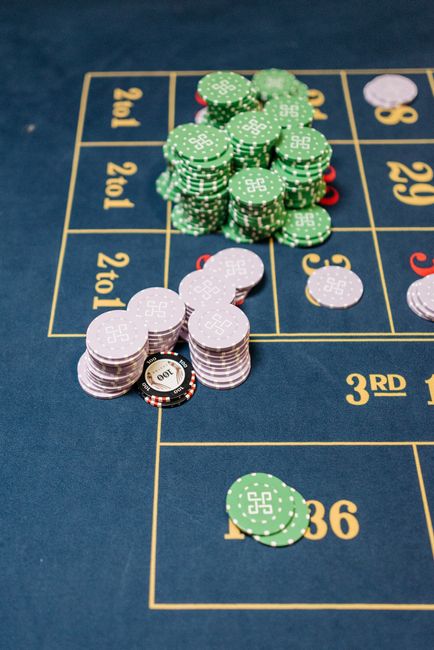
Take a standard European roulette wheel. One zero, 37 pockets, pays 35-to-1 on a single number. The true odds are 36-to-1. That gap is a 2.7% edge. Sounds tiny. Now put 500 spins on it at $10 a spin. Your expected loss is roughly $135. The variance might hand you a win on any given night, but the math always catches up. Compare that to American roulette with its double zero, where the edge nearly doubles to 5.26%. Same game, same table, wildly different long-term outcome.
Slot machines are where this really bites. A land-based slot might hold 6% to 8% of every dollar wagered. Online slots, competing for traffic, often sit between 2% and 4% on the good end, but many high-volatility titles flirt with 8% or worse. If you spin $200 an hour on a 4% edge machine, you are effectively paying $8 an hour for entertainment. A 2% edge machine, same volume, costs you $4. Over a year of weekly sessions, that difference compounds into hundreds of dollars.
- Blackjack with perfect basic strategy: 0.5% edge, the best bet in the building
- Baccarat banker bet: 1.06%, quietly one of the sharpest options available
- European roulette: 2.7%, acceptable for occasional play
- American roulette: 5.26%, avoid unless you enjoy paying double
- Most penny slots: 6% to 10%, entertainment pricing, not investing
Slots: Volatility Is the Variable Nobody Talks About
Everybody obsesses over RTP, the return-to-player percentage, and almost nobody talks about volatility. That is backwards.
RTP tells you how much the machine pays back over millions of spins. Volatility tells you how it pays it back. A low-volatility slot dribbles small wins regularly, keeping your balance steady while slowly grinding you down. A high-volatility slot does the opposite: long dead spells punctuated by occasional massive hits. Both can share the same 96% RTP and feel like completely different games.
Here is the practical takeaway. If your bankroll is $100, playing a high-volatility slot at $2 spins is a recipe for busting in twenty minutes. Drop to $0.20 spins and that same balance can survive 500 spins, giving variance a chance to work in your favor. Bankroll sizing relative to volatility is the single most underrated skill in online slots, and ignoring it is why most players blow through deposits before the session even gets interesting.
Poker Is the One Game Where Skill Actually Shifts the Edge
Everything above assumes you are playing against the house. Poker is different. You are playing against other people, and the house just takes a rake. That rake is brutal at low stakes, often 5% capped at $3 per pot, which means you need to be meaningfully better than your opponents just to break even.
But here is the flip side: in poker, a genuinely skilled player can sustain a win rate over tens of thousands of hands. No slot player can say that. No roulette player can say that. This is why serious gamblers gravitate toward poker, and why the discipline required is so much higher.
- Track every session. Not just wins and losses, but hands played, hours logged, and win rate per hundred hands. Without data you are guessing.
- Study one format deeply. Tournament and cash game strategy overlap far less than beginners think. Pick one and stay.
- Move down when running bad. Ego is the most expensive leak in poker, full stop.
- Exploit soft games, not hard ones. Sitting with four pros because the stakes are exciting is a donation, not a challenge.
The rake math matters too. A 5% uncapped rake at high stakes can turn a winning player into a loser. Always check the cap and the structure before committing to a room, live or online.
Sports Betting: Line Shopping Is Free Money
If you bet on sports and only use one sportsbook, you are leaving money on the table every single weekend. It is that simple. Odds on the same market routinely differ by 3% to 5% between major operators. On a $500 bet, that difference can be twenty dollars or more, and it costs you nothing to find it. Many readers start with mahjong slot when comparing options.
Sharps do not beat the closing line by being smarter than the market. They beat it by being faster and by taking the best available price. Modern odds aggregators and multi-book accounts have made this accessible to anyone willing to put in ten minutes of work per bet. The pick itself becomes secondary when the price is right.
A quick rule of thumb: a coin-flip bet at -110 is a 52.4% break-even proposition. If you can find that same bet at +100 elsewhere, your break-even drops to 50%. That single shift turns a losing long-term strategy into a profitable one, without any change in your handicapping skill.
Bankroll Management Beats Every Tip Sheet
No system, no Martingale, no betting pattern survives basic math. But bankroll management does. It is the only reason professionals last long enough for their edge to realize itself.
The principle is boring and that is why most people skip it. Your total gambling bankroll should be money you can lose without changing your life. Deposits should never exceed 2% to 5% of that total. Sessions should have a stop-loss and a stop-win, both written down before you sit down. Distraction is the enemy here: a phone buzzing during a final table is worth more than any strategy book.
There is also a psychological component nobody enjoys hearing. Chasing losses amplifies every bad decision you have ever made at a table. Stepping away after a big loss is not weakness; it is the discipline that separates the 2% of players who are net positive from the 98% who are not.
The Honest Conclusion
iGaming rewards one type of player more than any other: the one who treats it like a game of edges, not a lottery. That does not mean every bet is winnable. It means the people who survive long term are the ones asking uncomfortable questions about RTP, rake, volatility, and odds. They shop lines, size their bets properly, and walk away when the numbers are against them.
If you take one thing from all of this, make it this: the house always has an edge, but the size of that edge is negotiable. Choosing the right game, the right stakes, and the right volume can turn a 5% bleed into a 1% one, and over years of play, that difference is everything. Luck decides any single session. Discipline decides the year.